

Key TakeawaysHide
- Choose work examples that relate to the job you are applying for. Different employers may ask different questions.
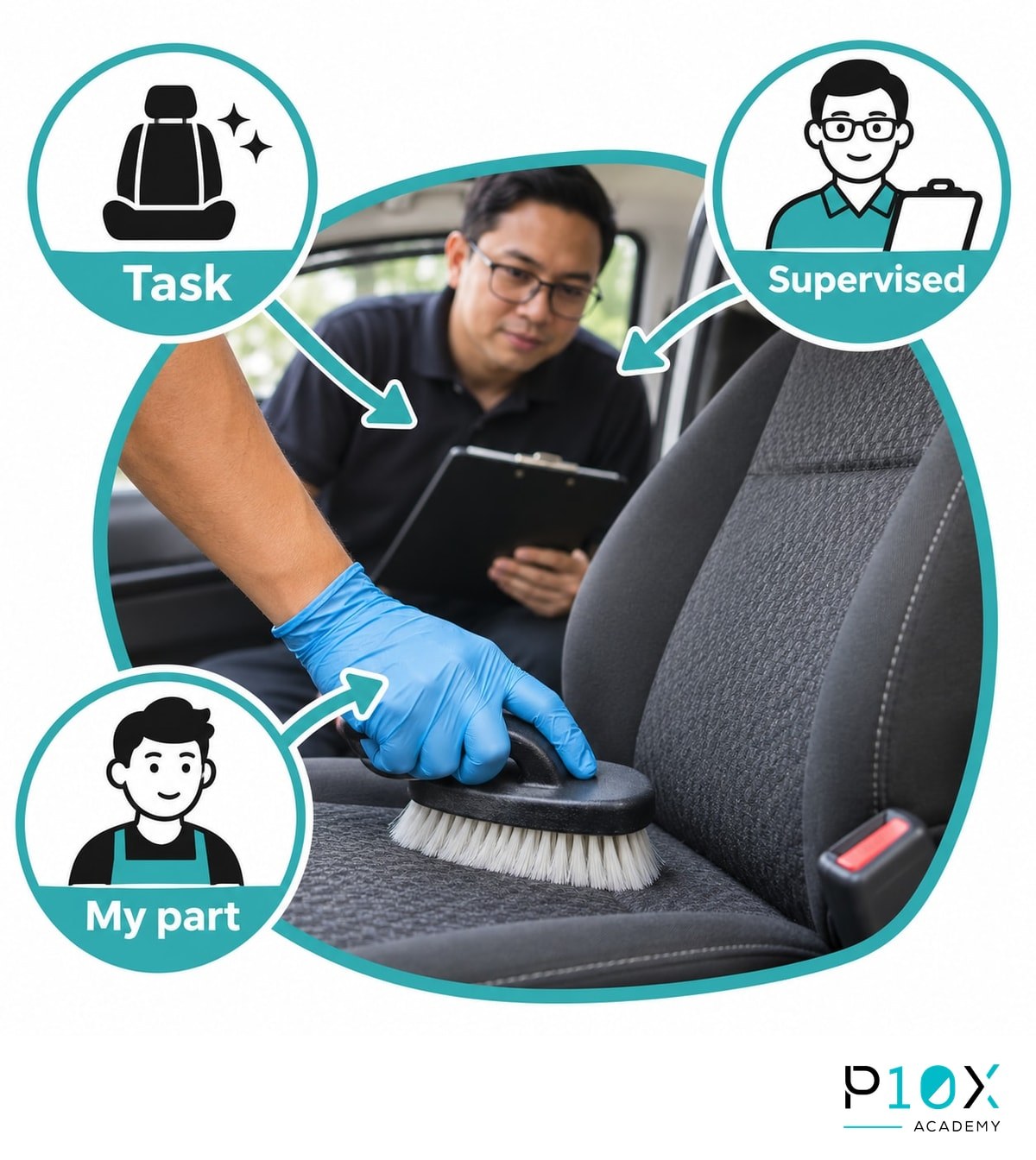
- Explain which work you did yourself and where a trainer or supervisor helped.
- Share work photos only with permission, and make your contribution clear.
- If the employer proposes a practical test, find out what you would do, who would supervise and whether you would be paid before you agree.
Prepare for car detailer interview questions by choosing real work examples, reading the vacancy closely and finding out how the workshop expects you to work. You do not need a perfect answer for every possible question. You need to explain what you have done, what you can do with guidance and what you still need to learn.
If this would be your first paid detailing job, supervised training and practice on your own car can still give you something useful to discuss. The important part is describing that experience accurately, rather than making it sound like employment.
What does this detailing job actually involve?
Your preparation should start with the advertised duties, because a detailing role can involve different work in different businesses. Look for the tasks you would do each day, the experience requested and who would guide you. That gives you a better starting point than memorising answers from a general interview list.
Read the vacancy again and note any duties you cannot explain. Does it mention washing, interior cleaning, polishing, coatings or preparing cars for handover? Are you applying to assist someone, carry out specified tasks or take responsibility for completed work? A job title alone may not answer those questions.
For an overseas example, Enterprise Mobility's automotive detailer careers page describes cleaning, sanitising, inspecting and preparing vehicles. That is one type of role, not a checklist for every Malaysian workshop. If an advert mixes detailing with repairs, understanding the difference between a detailer and a mechanic can help you ask which work the vacancy actually covers.
Our Car Detailing Operation Level 2 programme lists topics such as exterior washing, polishing and interior detailing. Use the vacancy, rather than a course topic list, to identify what this employer needs.
It also helps to know how instructions reach you. You could ask who assigns the day's work, who checks it and where a new worker should go with a question. These details help you picture the job you are discussing.
Questions about your experience and detailing work
Choose a real task you can explain from beginning to end, including your own contribution and any supervision. An interviewer may ask about your experience, but you cannot know the exact wording beforehand. Practising with a few different prompts helps you explain the work instead of reciting a prepared speech.
What work have you actually done?
Useful practice questions include “Which detailing tasks have you tried?” and “Which parts did you do yourself?” Start with something specific that you remember clearly. Name the task and setting, then explain whether it was paid work, a lesson or personal practice. If several people worked on the car, separate your part from theirs.
You do not have to name every product in a workshop. Mention tools and products you actually used, and be ready to explain their purpose in that task. A name you recognise from a video is not the same as something you have handled yourself.
How did you know the work was ready?
Think about how your work was checked. Did a trainer inspect it? Was there something you were asked to repeat? Describe the feedback you received and what you changed. If someone else made the final decision, say so. This gives the interviewer a clearer account than describing the result as perfect.
For each example, explain what the job was, what you did, who checked it and what you learned. You can use those questions to remember what happened. Do not change the ending to make your work sound more successful. If you cannot remember an important detail, leave it out rather than filling the gap.
What do you do when you are unsure?
You might practise explaining how you would ask for clarification before using an unfamiliar tool or working on a surface you do not understand. Avoid guessing a technical answer just to keep talking. Asking what the employer means is more useful than answering a different question confidently.
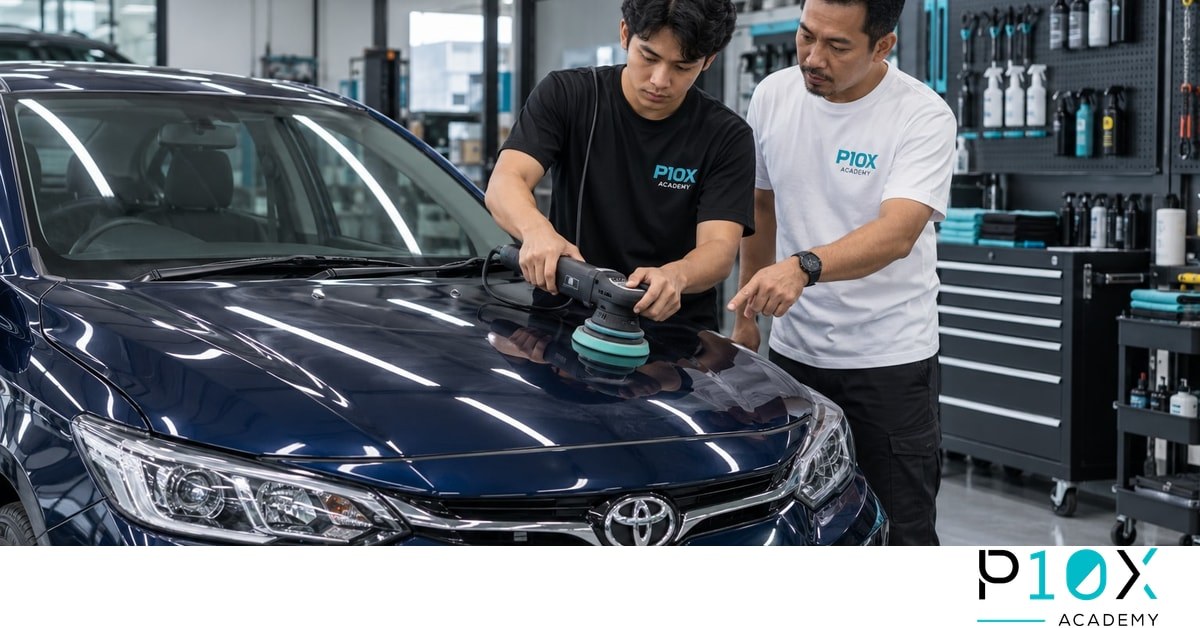
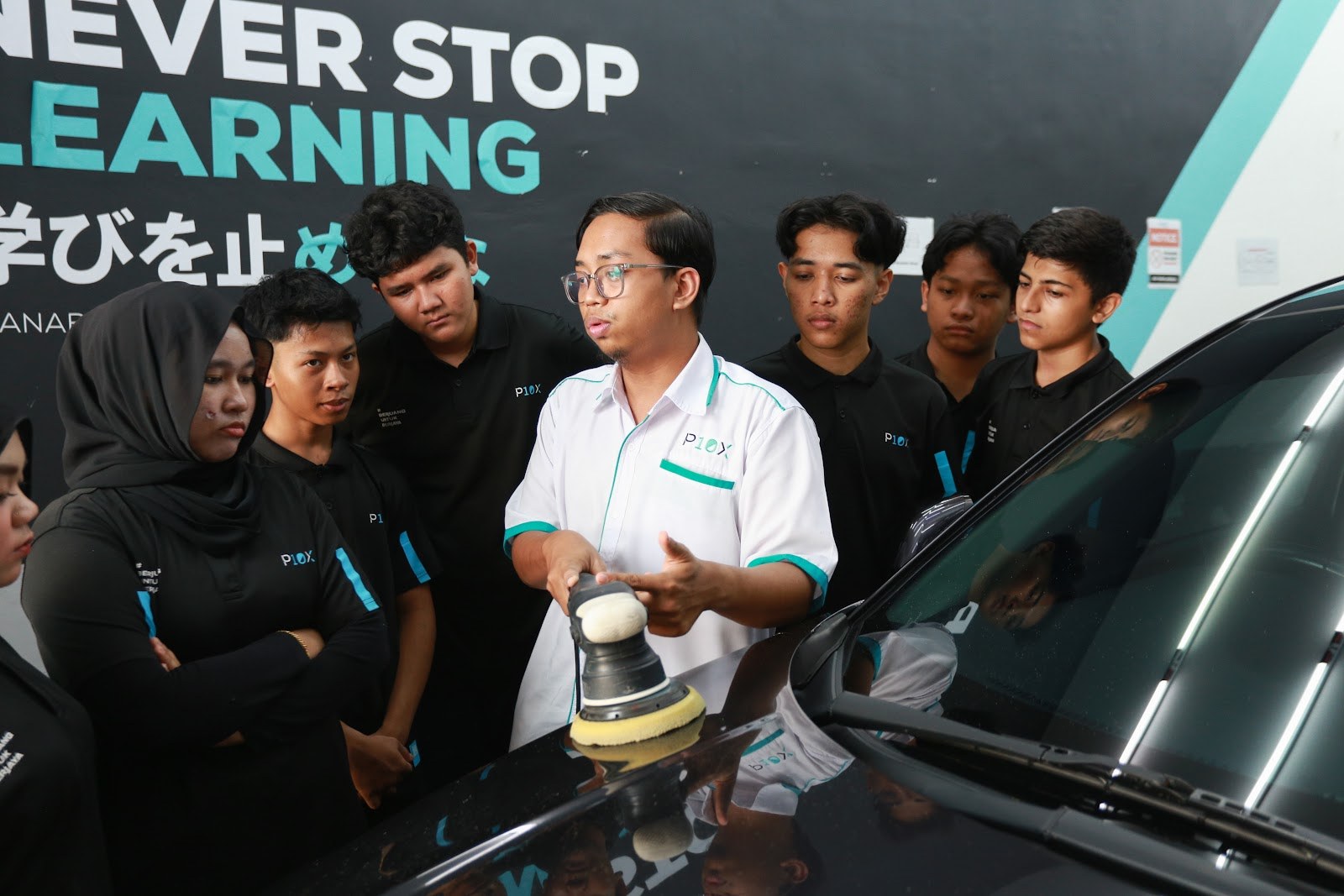
There is also a difference between watching a polisher demonstration, trying the machine with a coach beside you and carrying out the work independently. Describe the level you have actually reached. That distinction matters more than sounding experienced with equipment you have only seen someone else use.
How to answer when you have no paid experience
If you have not had a paid detailing job, say so. You can talk about a task you tried during a lesson, work on your own car or experience from another job. Explain where you learned it and who helped. A lesson does not need to sound like a customer job to be worth discussing.
For training, describe a task you tried, the help you needed and the feedback you remember. If you practised on a family car, identify it as personal practice. If you have only observed the work, explain what you watched without claiming that you can already perform it.
Experience elsewhere may help you answer a question about teamwork, attendance or receiving instructions. You could choose a real school project, shop role or other job where your contribution is easy to explain. For example, organising a group task can show how you communicated with other people. It does not show that you know how to polish a car.
Your resume when you have no work experience and your interview answers should describe the same activities. If a CV entry needs a long explanation to stop it sounding like paid employment, the wording probably needs to be clearer before the interview.
Course names alone do not explain what you have tried. Polishing, for example, can mean different tasks at different stages of learning. You could explain whether you watched a demonstration, tried the task with help or completed it yourself. If you have not tried it, say so rather than treating an advertised course level as your own experience.
Which work examples should you bring?
A few examples that you can explain are more useful than a large collection of attractive car photos. If you have permission to share your own work, choose examples that show the task and your contribution. Photos are optional; a clear account of what you did still matters when you have nothing suitable to display.
For each example, work out what you would tell the interviewer. What was the task? Which part did you do? Who supervised or checked it? If a trainer completed the difficult part, that belongs in the explanation. Your own assessment notes can help you remember feedback, if you have permission to share them.
Permission matters when a car belongs to a customer, workshop or another person. You could ask whether the image may be used in a job application and remove identifying information where appropriate. Avoid sharing private messages, customer details or documents that were not yours to distribute.
If you use a before and after pair, choose views that allow a fair comparison. Filters, changed lighting or a different angle can make the work look more impressive without explaining what you achieved. Do not use another person's results as your own.
Want to explore detailing training?Explore Car Detailing Operation Level 2 for the current programme details and contact options.
It helps to open the selected files before the appointment and make sure you can find them without searching through a full gallery. You could practise explaining one example briefly, then pause for questions. The picture supports your explanation; it should not leave the interviewer guessing which work was yours.
Talking about mistakes, deadlines and customers
Prepare to discuss how you respond when work does not go as expected, using a real example where possible. A useful answer explains what you noticed, who you informed and what happened next. It does not need a dramatic rescue or a claim that you have never made a mistake.
For practice, consider questions such as “What would you do if you noticed a problem?” or “How would you handle two tasks needing attention?” These are rehearsal prompts, not a prediction of this employer's questions. If the interviewer asks for something that happened, choose an actual event rather than presenting a hypothetical situation as experience.
When describing an error, explain your part without blaming everyone around you. Include any help you needed. If you did not make the final decision, explain who did. You can discuss what you would ask next time without inventing a better result than the one that occurred.
Time questions need the same care. Avoid promising a completion time for work you have not assessed or been trained to do. If two instructions conflict, you could explain that you would ask the supervisor which task to do first. For a customer complaint outside your responsibility, asking who should handle the response is more useful than promising a repair or a refund yourself.
Speaking clearly can take practice even when you know the work. We came across an older Reddit post by a detailer preparing for a phone interview. The applicant was overseas and already had detailing experience, but was worried about explaining those skills over the phone. If you share that worry, try explaining one work example aloud. Say what you did and leave time for another question. A list of product names cannot do that explaining for you.
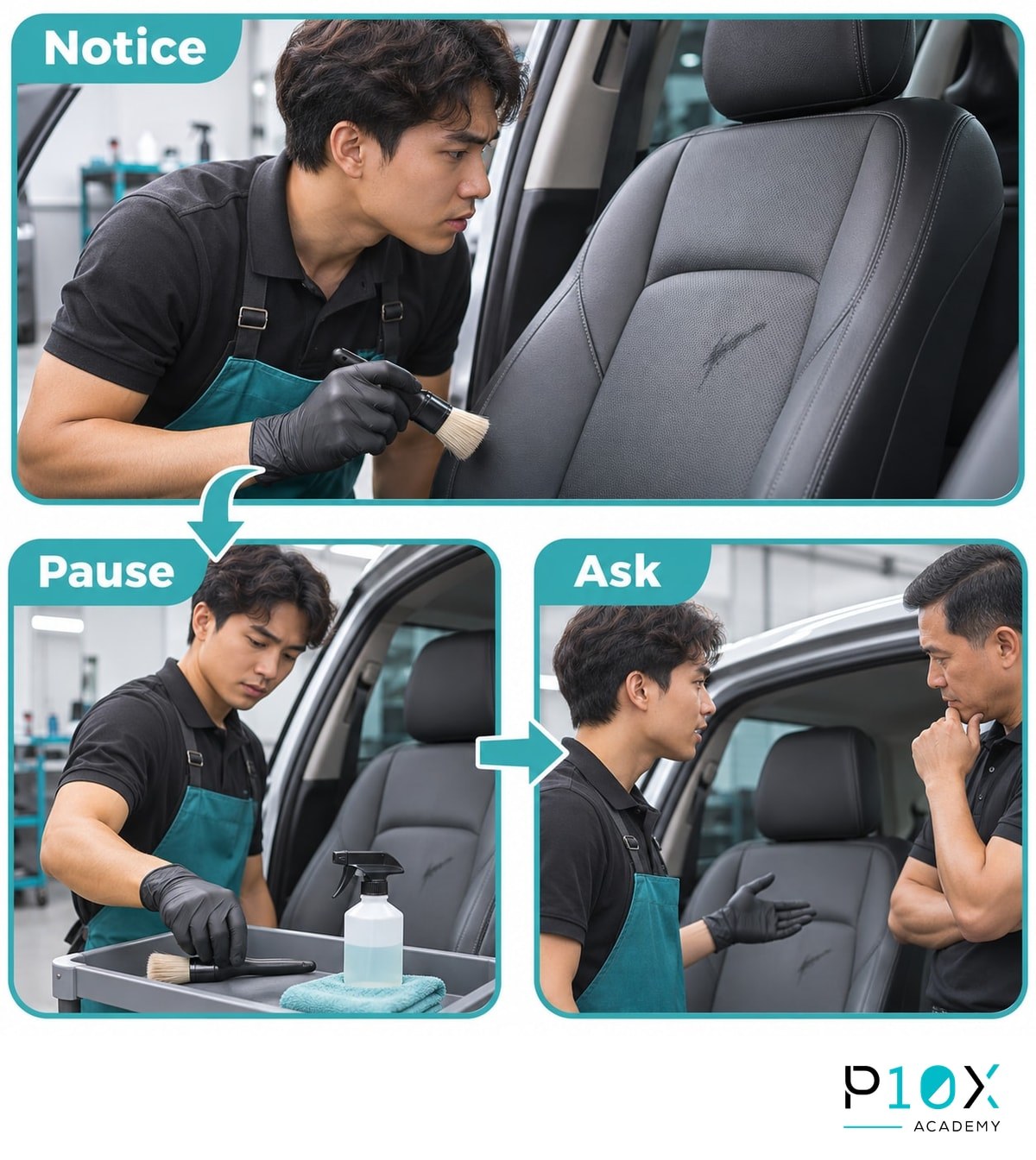
If you are asked how you would handle an unfamiliar mark or possible damage, explain that you would stop and ask for help rather than hide it or try a repair you have not been taught.
What training can show, and what it cannot
Training gives you tasks and feedback to discuss, but an interview still needs an explanation of your own work. Course attendance, a student assessment and an employer's decision are different things. Use your training record to describe what you practised and how it was checked, rather than treating it as an automatic job offer.
You could review your notes before the interview and select one piece of feedback that changed how you approached a task. What did the trainer ask you to notice? Which step needed another attempt? What would still need supervision? Your answers show what you actually practised and what you still need to learn, rather than just naming the course.
You can also ask the interviewer what further instruction a new worker receives. The answer may help you understand whether the vacancy fits your present experience. You can explain which tasks you have practised and where you still need help. Finishing a course does not mean you will know how to do every task in a new job.
Our detailing programme's listed topics include exterior washing, engine cleaning, interior detailing, polishing and coatings. That list describes programme content. It does not mean that every applicant has completed every task independently or that every detailing vacancy includes all five areas.
If you have an assessment result, explain what you were actually assessed on and keep the document available if requested. Avoid saying that one assessment proves you can take on every vehicle or unfamiliar surface. If you cannot remember which tasks were assessed, you can ask your training provider for the details before discussing the result with an employer.
A list of course subjects can help you choose an example, but it is not a record of the work you personally completed. Washing, polishing and working with different materials are subjects covered in our detailing training post. For your interview, choose a task you actually practised and explain what you did and how it was checked.
Questions to ask before agreeing to a practical assessment
Not every workshop asks applicants to do a practical test. If the employer proposes one, you can ask what work you would do, who would supervise and whether you would be paid. Those answers help you decide whether to attend and what you would need to bring.
You could ask what you would be expected to demonstrate, how long to allow and who would supervise. Find out which tools and materials are supplied, what protective equipment is needed and whether you should bring anything. If a vehicle will be used, ask who has authorised that work and how instructions will be given.
Payment and other arrangements also need a direct conversation. Ask what applies rather than assuming that the activity is paid, unpaid or a full working shift. If the answer is unclear, you can request clarification before agreeing to attend.
Questions about the job itself remain useful even when there is no test. We also came across an experienced detailer in a US forum preparing questions for an interview. They wanted to ask about a typical working day, the tools and the company culture. For your own vacancy, you might ask how work is shared, who helps new staff and what the usual hours are.
If an offer follows, read the written job terms before agreeing. An encouraging interview conversation does not tell you everything about the duties and conditions you would accept.
A simple plan for interview day
Before the interview, check the appointment details, choose work examples you can explain honestly and note a few questions about the job. This gives you something useful to discuss without memorising a speech or pretending to have more experience. Leave time to listen to the interviewer, too.
Confirm the location, time, contact person and whether the interview is by phone, video or in person. If a workshop activity has been arranged, ask beforehand what clothing or equipment is appropriate. That is better than arriving prepared for an activity nobody has discussed with you.
Have your CV and selected examples easy to reach. Check that any files open properly, and keep a short reminder of the tasks you want to discuss. Full paragraphs of notes can make it harder to answer the question actually being asked; a few factual reminders may be enough.
Before leaving or ending the call, you could ask about the next step and when to expect an update. If you do not understand a term, ask for an explanation while the right person is there. Even if the employer has not decided, the interview can help you understand what the job involves. You can use that information to decide what to practise or explain more clearly in your next application.