


Key TakeawaysHide
- Detailers clean and care for vehicle surfaces; mechanics service, diagnose and repair vehicle systems.
- Cleaning an engine bay does not mean the engine has been repaired or serviced.
- Compare the actual tasks, supervised practice and assessment before choosing training.
- Experience in detailing does not mean you can also repair cars, and mechanical experience does not mean you can detail them.
A car detailer cleans and cares for a car’s surfaces, while a mechanic services, diagnoses and repairs its systems. Both work with vehicles, but enjoying one kind of work does not mean you will enjoy the other. If you are choosing your first course or considering a change of career, start with the tasks you want to learn.
Detailing is one way to work on a car’s appearance. Tint installation, paint protection film and wrapping are other options. If that kind of work interests you more than servicing or repairs, our guide to choosing your first auto aesthetics skill compares those options.
What a car detailer does during the day
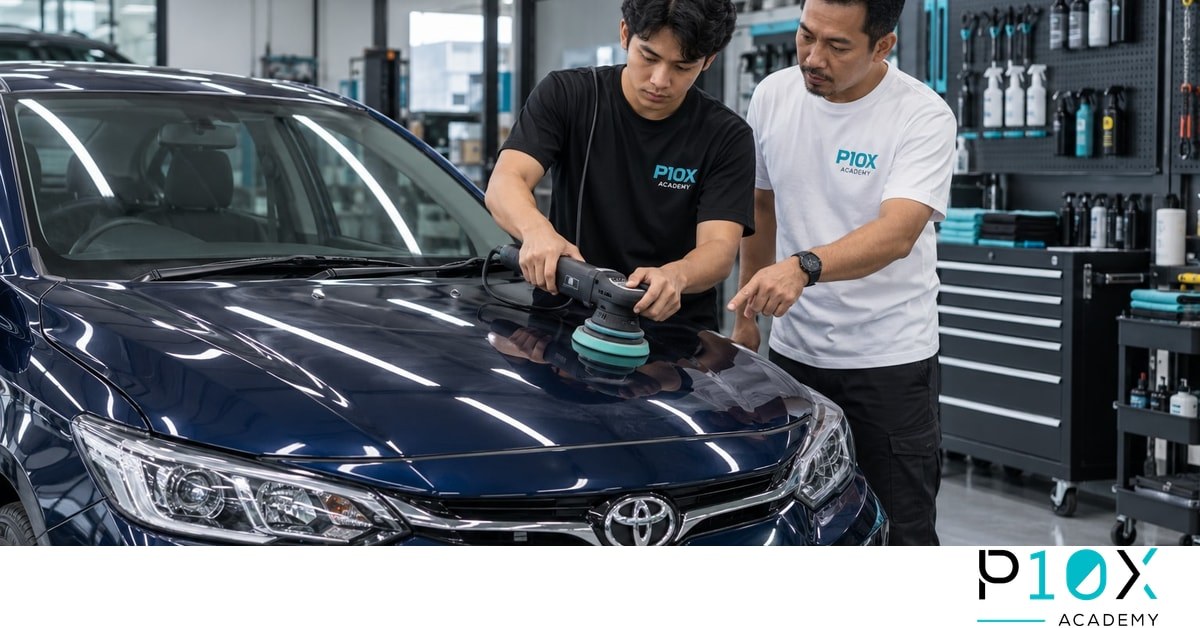
Car detailing involves cleaning and caring for surfaces such as paint, glass, seats and interior trim. Depending on the job, it can include washing, interior cleaning, polishing and applying protective products. The work requires more than making a car look clean at a glance: the material, its condition and the agreed task matter too.
Our Car Detailing Operation programme lists five areas of learning: exterior washing, engine cleaning, interior detailing, polishing and coatings. Those are the topics on that programme page, not a list of everything every detailer must do. Engine cleaning means care of the engine bay in this curriculum, not diagnosing or repairing an engine.
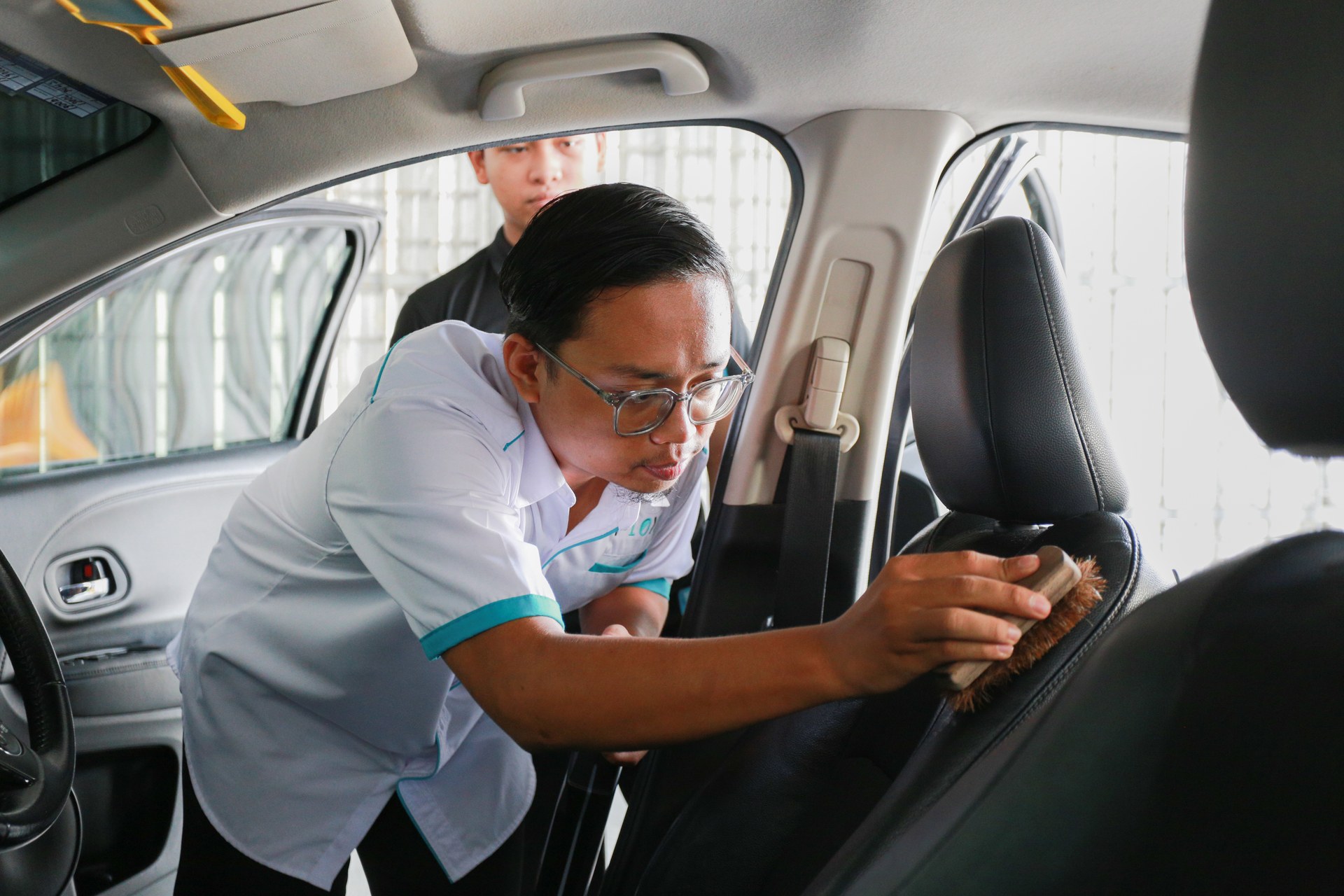
Consider the inside of a car: the seats, carpet and plastic door trim are made from different materials. Learning to care for them involves recognising the material, choosing suitable tools and products, carrying out the assigned work and inspecting the result. Our curriculum includes leather and fabric seat care, carpet and mat cleaning, and treatment of interior materials.
Polishing is another part of the field, rather than a synonym for every cleaning job. Training includes understanding paint defects, using polishing equipment and inspecting the finish. A beginner should not describe all those tasks as skills they can perform independently just because they have watched a demonstration.
For someone considering this work, a useful question is whether the actual tasks appeal to you. Cleaning a seat carefully, checking a finish and explaining what has been done are more informative examples than a photograph of a shiny car. They help you imagine the work you would be learning, including the checks before and after it.
Before cleaning someone else’s car, you need to know what they have asked you to do. For example, a customer asking for seat cleaning does not mean you can promise to remove every stain. If you are unsure what can be cleaned safely or what result is realistic, ask your supervisor before making a promise.
What a mechanic services, checks and repairs
A mechanic services cars, finds the cause of faults and carries out repairs they have been trained and assigned to do. Depending on the job, that can mean checking a system, replacing a faulty part and testing it afterwards. This differs from cleaning and caring for a car’s appearance, even in the same workshop.
The US Bureau of Labor Statistics description of automotive service technicians and mechanics includes routine maintenance, using diagnostic equipment and repairing or replacing parts. It also describes explaining problems and repairs to customers. These examples help define the occupation; US entry requirements, pay and employment forecasts are not Malaysian rules or prospects.
In Malaysia, MySPIKE’s light vehicle diagnostic competency profile lists work involving engine management, electrical and electronic systems, braking and other vehicle systems. It shows the kind of technical work covered by that particular profile. It does not mean every new mechanic starts with every listed skill, or that a detailing course teaches them.
Diagnosis means finding what is causing a problem, rather than replacing something simply because the vehicle is not working as expected. Servicing and repairs also involve understanding the task, using suitable equipment and checking the result. The specific systems someone works on depend on the role and their training.
That distinction matters when reading a vacancy or course description. “Automotive” is a broad label. A course about vehicle appearance and one about mechanical servicing can both use it while teaching very different work. Look at the actual tasks instead of assuming the shared label makes the training interchangeable.
Communication matters here as well as in detailing. Someone who enjoys working on vehicles still needs to understand instructions and explain what has been checked or changed. Neither occupation is simply a choice between working with your hands and talking to people.
Different tools, different work on the same car
Detailers and mechanics may work on the same car, but their tools help them do different jobs. Detailers use brushes, vacuum cleaners and polishers to clean or care for surfaces. Mechanics choose equipment for the part or system they are checking. Recognising a tool does not mean you know how to use it safely and correctly.
An open bonnet makes the distinction especially clear. Our detailing curriculum includes preparing an engine bay for cleaning and identifying sensitive components. That is not the same assignment as investigating why an engine will not start. A clean engine bay does not mean the engine has been serviced, tested or repaired.
Likewise, a polished body panel does not tell you the condition of the brakes or electrical system. A mechanical repair does not tell you whether someone has learned to polish paint or care for different upholstery materials. Each result needs to be judged against the work actually requested, not the general appearance of the vehicle.
| What you are comparing | Car detailing | Mechanical work |
|---|---|---|
| Main purpose | Clean and care for surfaces as agreed with the customer | Service vehicle systems, find faults and make repairs the mechanic is trained and assigned to do |
| Examples of work | Interior cleaning, exterior washing, polishing | Servicing, testing systems, repairing or replacing parts |
| Training to look for | Materials, tools, surface care and checking the finish | Relevant vehicle systems, servicing, diagnosis and checking repairs |
| Questions to ask | Which parts of the car you will clean or care for, what you will try and how the trainer checks the result | Which systems learners will check or repair and how the trainer checks that work |
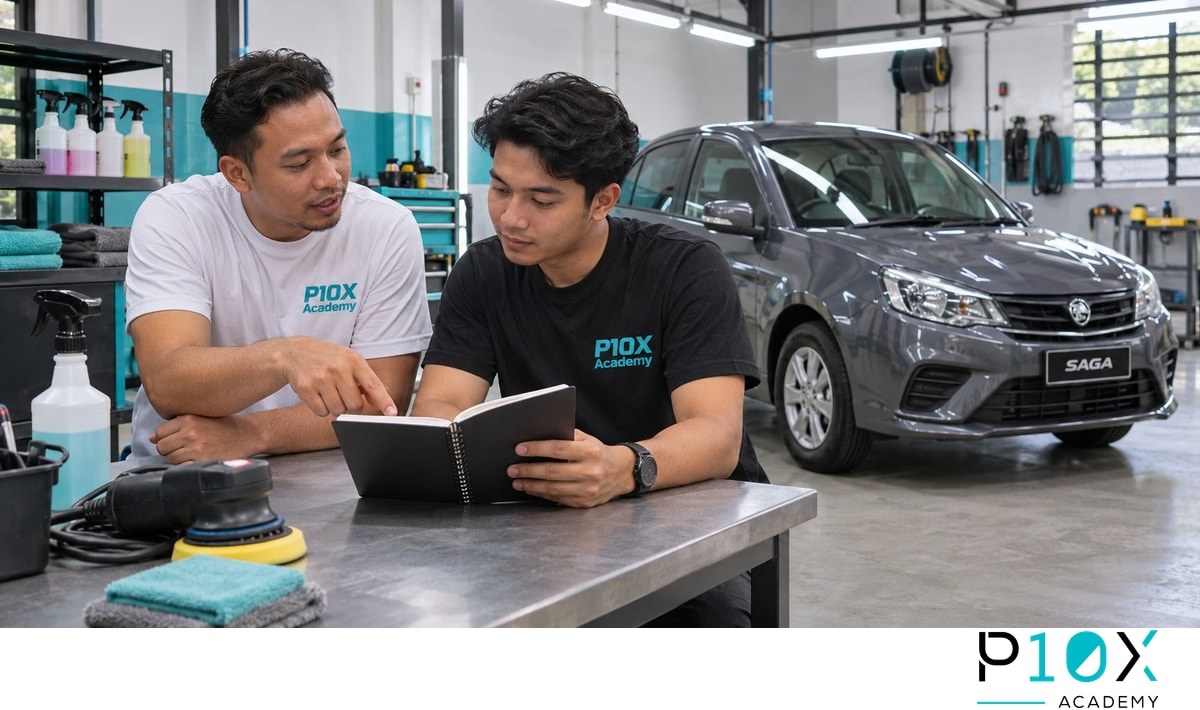
For a course visit, the useful conversation is about why a tool is being used and what the learner must understand before using it. A demonstration can help you see the task, but it should not be mistaken for a chance to try unfamiliar equipment without supervision.
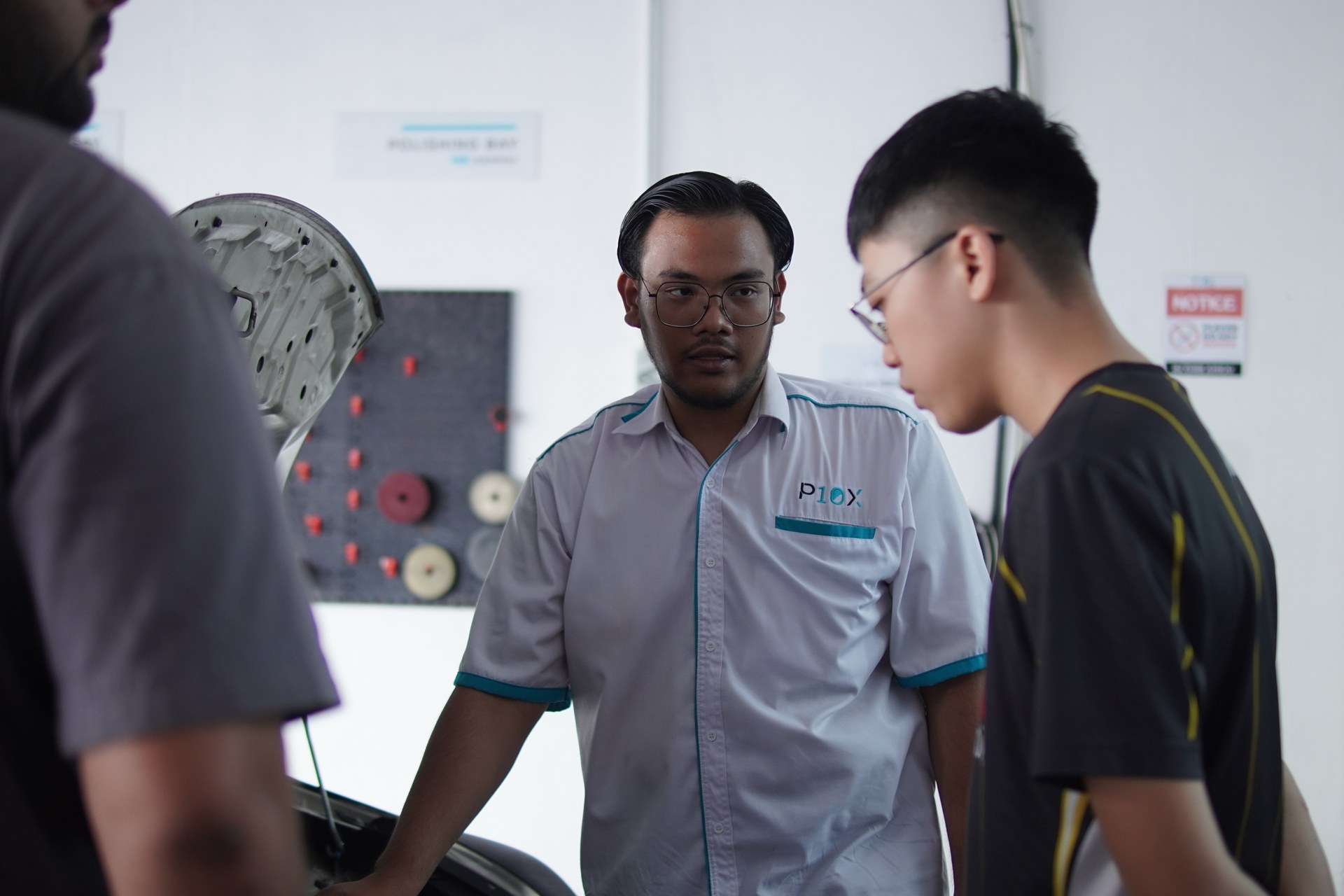
If you are choosing a course, ask the trainer to explain the task being taught beside the vehicle. Are learners preparing surfaces for cleaning, or checking a system for a fault? Knowing the task helps you decide whether that session teaches the work you want to learn.
Choose training that teaches the work you want
A useful course comparison starts with the work you want to learn, then looks at the modules and practical activities. A familiar course name is not enough. Choose a task that interests you and find out how the course teaches it, including what you will watch and what you will try yourself.
Suppose you are interested in interior detailing. Our programme lists interior materials, seat care, carpets and mats. You could use those subjects to ask a provider which surfaces learners work on and how the tasks differ. A course description that mentions interiors may still leave you unsure whether the activity involves seats, trim or another area.
For mechanical training, start with a task such as routine servicing or investigating a fault in a particular system. Ask which systems the course covers and what the practical activity involves. This gives you something specific to compare instead of treating every course with “automotive” in its name as an alternative to every other one.
Next, separate a demonstration from your own practice. Watching a trainer use a polisher can introduce the work, but ask whether you will also handle the equipment under supervision. If an activity is observation only, record it that way when comparing courses. Neither a photograph of equipment nor a module title tells you how you will take part.
If a course offers a qualification, it helps to check its full name and which skills are assessed. Sijil Kemahiran Malaysia is available in different fields of work. A qualification in detailing does not, by itself, show that someone has learned or been assessed on mechanical repairs.
Interested in learning car detailing?Explore our Car Detailing Operation programme and ask how the listed practical tasks are taught and assessed.
For each course, you could note which task you want to learn, where it appears in the course and whether you will watch or try it yourself. If the course information does not explain that, you could ask the provider directly. For example, “Will I practise seat cleaning, or only watch it?” is easier to answer than “Will I become good at detailing?”
Our detailing course post introduces subjects within vehicle surface care. Use that kind of subject list to begin your enquiry, then check the details of the actual course you are considering.
Show the skills you can actually perform
When you tell a trainer or employer what you can do, describe a task you have actually tried. Explain what you were asked to do, which part you did and where you needed help. A photograph of you beside a car does not show whether you cleaned it, watched someone else or did another job.
For a seat-cleaning exercise, you could describe the area assigned to you and what you did under supervision. Distinguish preparing the area, doing the cleaning and inspecting the result if different people handled those parts. You do not need to claim the whole job to show what you learned from your contribution.
A before-and-after photograph may show a visible change, but it cannot explain every part of the work. If you have permission to take and share photographs, add a short description of your own task. Avoid presenting a trainer’s finished work as your result or using a photograph that reveals a customer’s details without permission.
The same principle applies to mechanical work. If you observed a system check, say that you observed it. If you performed one part with guidance, describe that part and the guidance. Do not turn watching a repair into a claim that you can diagnose and repair the same fault independently.
You can also note what the trainer asked you to check again. What did you change when you tried once more? A note about a missed area or an incomplete check can help you remember what to practise, rather than leaving you with only a photograph labelled “finished”.
With more practice after a detailing course, you can work on the tasks you still find difficult. Before planning that practice, find out where you can do it, who can supervise and who can check your work. That help may not continue after the course. When describing your skills, be clear about what you have already done, rather than what you hope to learn next.
Our post describes a practical assessment at 63 Auto Detailing by Prestige. It is one example of learners having their work evaluated. It does not mean every course uses that assessment or that completing it guarantees a job.
Moving between detailing and mechanical work
Moving from detailing into mechanical work, or the other way round, means identifying the tasks you have not yet learned. Experience around cars may help you understand a workshop environment, but it does not replace training in a different subject. Neither occupation needs to be treated as a compulsory stepping stone to the other.
Some habits can be useful in both settings: keeping equipment organised, following instructions, explaining a problem and knowing when to ask for help. Those habits do not make a detailer qualified to diagnose a fault or a mechanic competent in paint correction. Practical ability still needs to match the task.
If you already have experience, describe it accurately when speaking to a provider or employer. Explain the work you have done, whether someone supervised it and what you want to learn next. That gives them something specific to discuss instead of a broad statement that you know about cars.
The same approach helps if a role combines services. A workshop might offer both detailing and repairs, but its range of services does not tell you what every employee is trained or expected to do. Ask about the responsibilities of the actual position rather than the business’s complete menu.
You do not need to dismiss your earlier experience or pretend it covers more than it does. Treat it as a starting point for identifying the next task to learn. That keeps a career change focused on a real gap in your skills rather than on moving “up” from one occupation to another.
Decide which work you want to learn first
To choose between detailing and mechanical work, look at what you would learn to do on each course. Would you rather learn to clean and care for surfaces or find and repair faults? Seeing the tasks learners practise can help you decide more than knowing that you enjoy being around cars.
A manageable first step is to name two tasks you want to understand better. You might be curious about cleaning vehicle interiors, inspecting a polished finish, routine servicing or investigating faults. You are choosing tasks to ask a trainer about, not claiming that you can already do them.
When an opportunity is available, observing a relevant session or discussing those tasks with a trainer can help. Ask what a beginner does, what supervision involves and what the course does not teach. There is no need to try a repair or buy equipment just to prove your interest.
If both fields still appeal, you can compare actual course information before making a commitment. The better first choice is the one whose work and learning requirements you understand well enough to consider seriously, not the one presented as easier, more prestigious or a guaranteed route to employment.