

Key TakeawaysHide
- Sijil Kemahiran Malaysia (SKM) Level 2 certificates cover different kinds of work, so the course’s field matters as much as its level.
- A course's entry requirements must explain whether a relevant lower SKM level is needed.
- The timetable, supervised practice, assessment and total costs help you compare courses before enrolling.
- MySPIKE, the official skills information portal, has separate checks for training programmes and centres, and for a person’s SKM certificate.
Earning SKM Level 2 shows that you have met the skills requirements for a particular occupational field. It is a Sijil Kemahiran Malaysia, or Malaysian Skills Certificate, under Jabatan Pembangunan Kemahiran (JPK), Malaysia's Department of Skills Development. JPK lists it between SKM Level 1 and Level 3 in its certification system.[1]
If you are choosing your first skills course, the level number alone won't tell you whether you can enrol or what you will learn. You need the programme name, entry conditions and training plan.
What the Level 2 certificate recognises
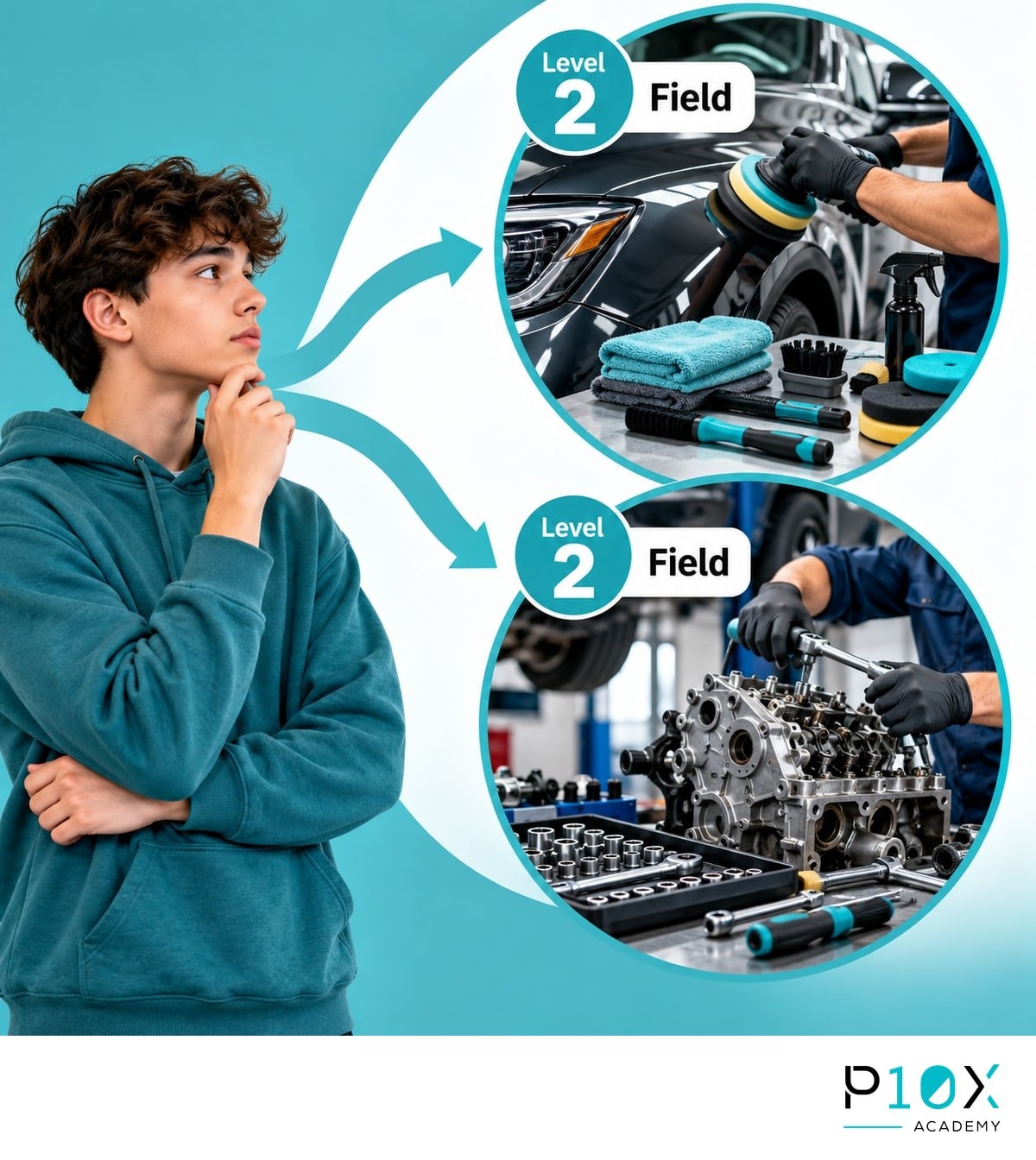
SKM Level 2 recognises competence in a specified field, rather than attendance at any course called “Level 2”. JPK describes accredited training by both field and skill level. Two programmes can therefore lead to Level 2 awards while teaching different work. Comparing the occupation named in each programme helps you understand what the shared level does not tell you.[1]
For someone interested in automotive aesthetics, that means looking beyond the word “automotive”. Washing, detailing, repairing a vehicle and administering a workshop are different kinds of work. A useful course description tells you which tasks you will practise and which qualification you are working towards.
Our SKM pathway programmes are listed separately from our shorter skills courses. That distinction helps you start the comparison, but the exact course and award still need to match your learning goal.[2]
When speaking to a provider, you can ask for the full programme title and code as they appear in the official record. You can then compare those details with MySPIKE rather than relying on a shortened marketing name.
Who can apply for Level 2?
Eligibility depends on the programme and the route you are applying through. JPK's guidance for training at a recognised institution states that a candidate needs a lower SKM level before taking a higher one in the same field. It also allows accredited centres to set additional conditions. That is not a promise of direct entry for every beginner.[1]
If you do not have SKM Level 1, the provider can explain how entry works for the exact Level 2 programme you are considering. A useful answer identifies the programme and explains the applicable prerequisite. “Beginners welcome” or “no work experience needed” does not, by itself, answer whether an earlier qualification is required.
The same care applies if you already hold a certificate in another field. Level 1 in one occupation does not automatically establish the skills needed for Level 2 in a different occupation. Sharing your actual qualification title and code gives the provider the details needed to assess the relevant pathway.
Applicants without Sijil Pelajaran Malaysia (SPM) should ask about the course's academic requirements directly. JPK's general overview is not a complete admissions list for every centre. Neither “all Level 2 courses require SPM” nor “every provider accepts applicants without it” is a safe assumption.[1]
We came across a parent in TVETMaster’s SKM comments asking whether their child could progress to Level 2 without SPM while changing fields. Those are two separate admissions questions: academic eligibility and whether the earlier skills qualification is relevant.[3]
Before applying, you can send a short enquiry with your age, highest school qualification, any existing SKM award and the course you want. A written copy of the current entry requirements gives you something clear to refer to when deciding whether to apply. There is no need to send identity documents to an unverified social-media account just to obtain general course information.
How training and assessment work
Learning at an accredited institution and having existing skills assessed are different routes. JPK describes institutional training in an accredited field and level. Its prior-achievement route, Pengiktirafan Pencapaian Terdahulu (PPT), assesses competence gained through earlier work or training. PPT is not simply a shorter beginner course.[1]
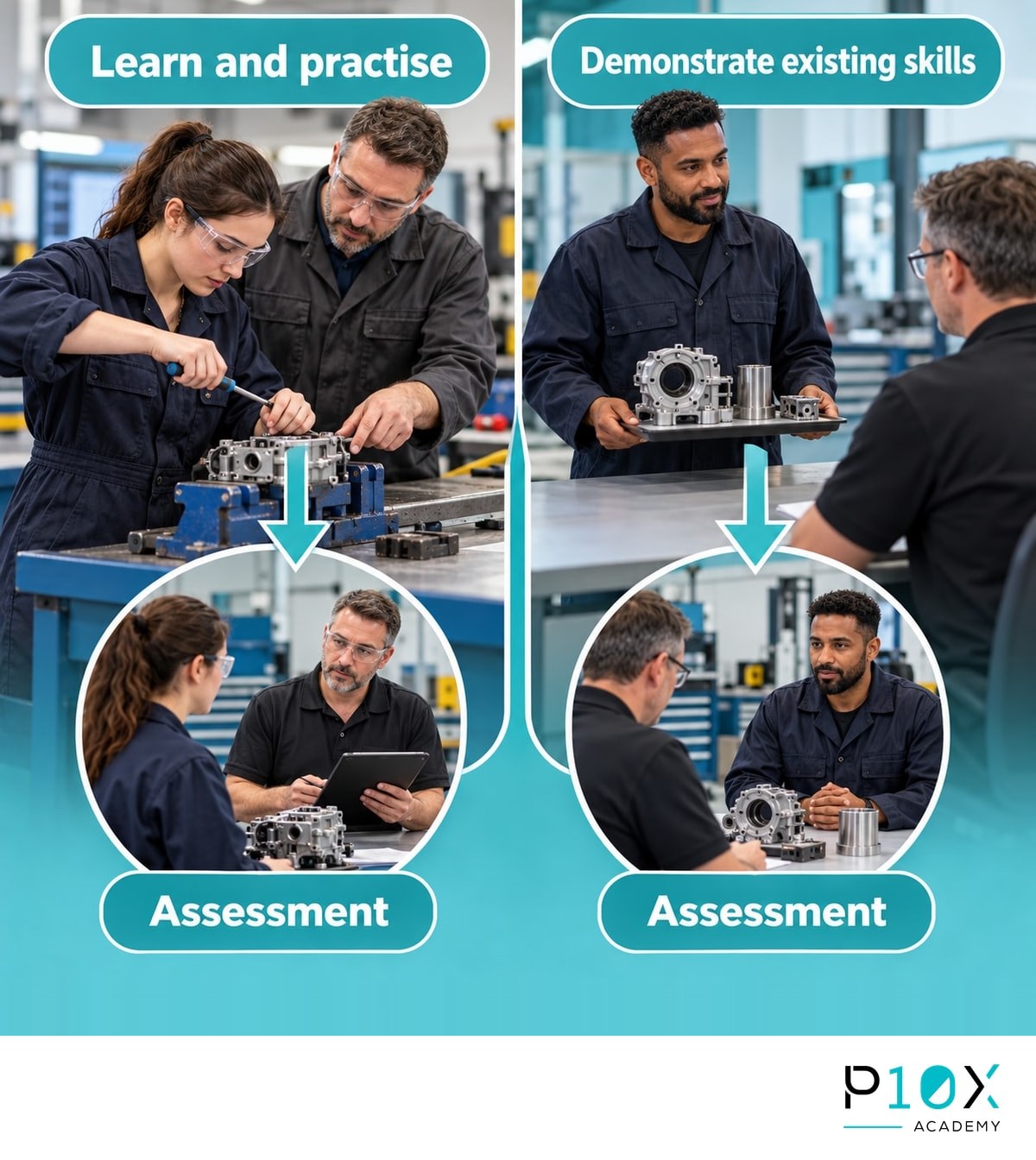
If you are new to the occupation, the training plan should make clear what you will have time to practise. You can ask which tasks you will practise yourself, which equipment you will use and how an instructor will help when your work needs correcting. Watching a demonstration and carrying out a task yourself are different learning experiences.
Before enrolling, you can ask how your work will be assessed, what evidence you will need to provide and what happens if some of your work does not yet meet the required standard. Paying the fee or attending every class should not be treated as a guarantee of certification.
If you already do the work, PPT may be worth discussing with an authorised assessment provider. JPK explains that evidence of competence is assessed and externally verified. Having worked in a workshop does not automatically prove every skill covered by the award you want.[1]
A detailing worker, for example, may have extensive experience with some tasks but little experience with others. An assessment enquiry should start with the programme's requirements and the evidence the worker can supply, not just how many years they have been employed.
A provider should explain how your experience fits the route before you commit to it.
How long does a Level 2 course take?
You cannot work out a course's duration from “Level 2” alone. The exact programme, training route and timetable all matter. A calendar duration does not tell you how many days you must attend each week, whether assessments are included or when you can expect to complete all requirements.
A useful timetable includes the planned start and end dates, weekly attendance and any separate assessment or placement commitments. Comparing course durations is only useful when both figures cover the same stages of training.
For a student travelling from home, a timetable can matter as much as the headline number of months. A class that finishes late, a long journey or an additional day for assessment can affect whether the course fits your routine. Having the actual schedule makes it easier to plan transport and other commitments.
You can also ask what happens after an absence or an assessment that needs another attempt. That helps you understand the difference between the advertised teaching period and the time it may take you to finish. No single month or hour figure should be treated as the duration of every SKM Level 2 programme.
Considering automotive skills training?Our SKM pathway programmes may be worth considering if you want to learn automotive skills. The team can explain which course and application route fit your qualifications and learning goals.
How to compare courses before applying
The official programme record helps you establish which course is being offered before comparing its learning plan, timetable and costs. JPK directs applicants to MySPIKE for accredited-centre and programme searches. A centre's name alone is not enough: the record needs to match the field and level of the course being offered.[1]
In MySPIKE, you can compare the institution name, centre code, programme title, programme code, level and displayed status with the provider’s information. If the titles differ, the provider can supply the applicable record and explain the connection. A similar name alone does not establish that the award is identical.
A visit, or a clear explanation of a typical session, can help you picture the practical work and feedback described in the training plan.
Fees need the same detail. You can request a written breakdown showing tuition, registration, assessment, equipment, materials and any other compulsory charges. It also helps to know whether repeat assessments or replacement materials cost extra. These are questions for the provider, not amounts to estimate from another college's advertisement.
If funding is mentioned, an allowance, a loan and a reduction in fees need to be considered separately. You can ask which support applies to you, who approves it and what you would need to repay. Until that support is confirmed for your application, relying on it could leave a gap in your budget.
A short comparison note can bring together each course’s exact title, entry requirements, timetable, practical work, assessment and total compulsory cost. Marking unanswered questions as “not confirmed” makes the gaps visible without filling them with guesses.
Before paying a deposit, you can review the cancellation and refund terms and confirm who receives the payment. Keeping the offer, fee breakdown and official receipt together gives you a clear record of the course you agreed to take.
What comes after Level 2?
Your next step could be work in the relevant field or further training. JPK lists SKM Level 3 above Level 2, followed later by Diploma Kemahiran Malaysia (DKM) at Level 4. Progression requires a suitable programme and its entry conditions; a higher level is not an automatic award.[1]
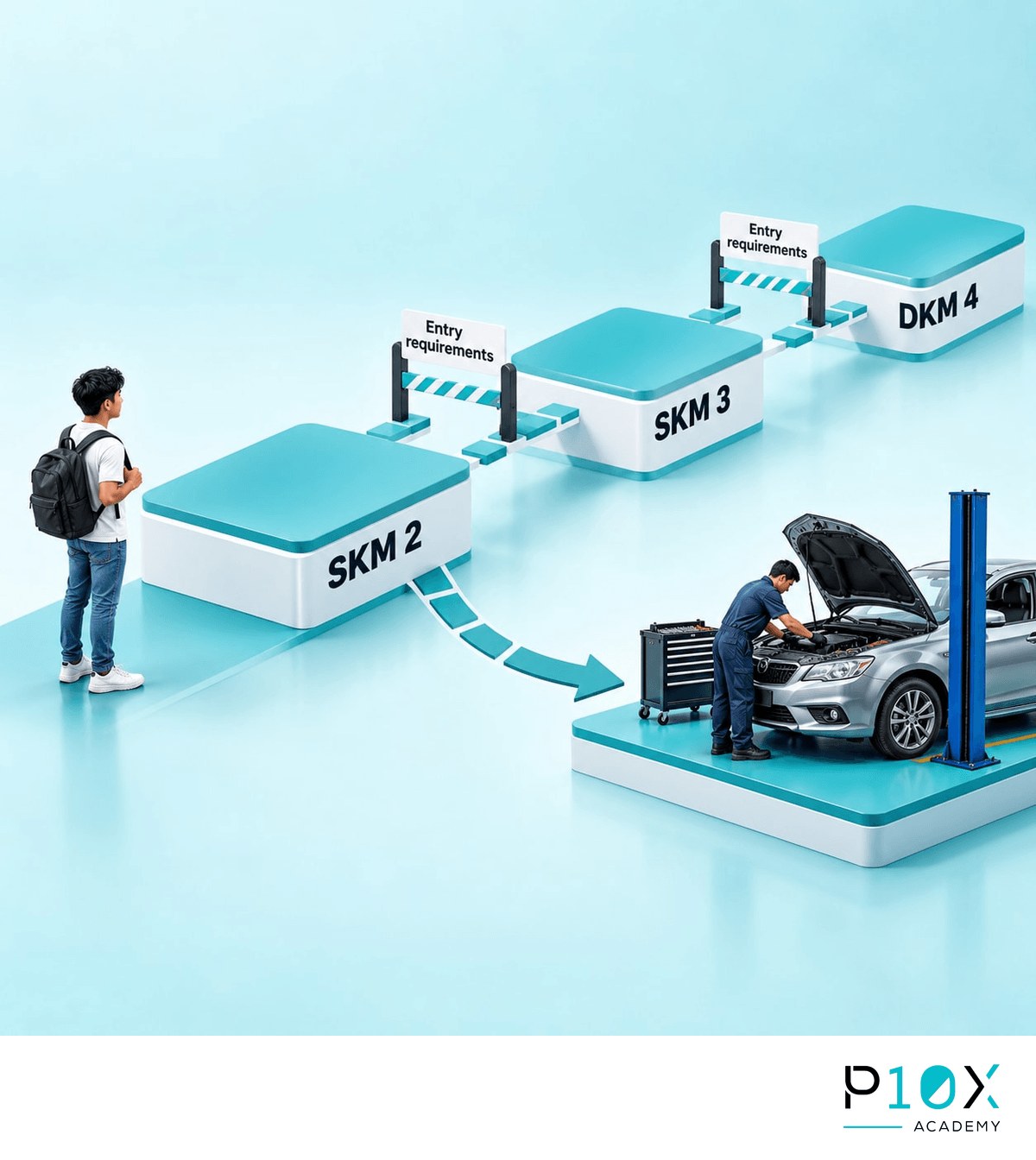
When enquiring about Level 3, the full title and code of your Level 2 award help the receiving centre assess whether it meets the entry requirements. If you plan to change occupations, mentioning that early gives the centre the context needed to explain your options.
For employment, the job’s actual tasks matter alongside the skills you have learned. A certificate gives information about your assessed skills, but the employer still decides whether you meet the role’s requirements. Specific examples of your work are more useful than a broad claim that you can do every task in the automotive industry.
When discussing assessment with a provider, you can ask whether it is part of the qualification or an employer’s practical evaluation, what it is for and who makes the decision. Videos of workshop evaluations can show the setting, but they do not establish the award or accreditation of a particular programme.
DKM is a later diploma qualification, not another name for Level 2 or an automatic next intake. At this stage, choosing a suitable field and completing the relevant requirements matters more than collecting level numbers.[1]
A useful first enquiry includes the course you want and the qualifications you already have. Answers about what you would learn, how you would be assessed and the total cost will help you decide whether the programme suits you.