



Key TakeawaysHide
- Beginners can look for workshop training, a structured course, or both.
- Ask how much work you will try yourself and who will review it.
- Finishing a course does not mean you are ready to take on every tint job by yourself.
- Describe your own practice honestly when applying for trainee roles.
You can start tint installer training without experience, but you need supervised practice and feedback before taking on work by yourself. Two possible starting points are a workshop willing to train a beginner and a course that lets you practise the work, not just watch it.
The important question is what you will actually get to do, who will check it and how you will improve after a mistake. A place in a workshop or a completed course does not answer those questions on its own.
If you are starting while employed elsewhere, planning training around your current work also means allowing time for travel and practice, not only the class dates.
What does a beginner tint installer actually do?
A beginner needs to learn how to prepare the car and check the result, not only how to handle the film. That can include preparing glass, protecting the vehicle, keeping tools ready and checking work with an experienced installer. Watching someone finish a window is useful, but it is not the same as doing the job under supervision.
For a local employer example, ServAuto's Window Tinting Technician listing welcomes beginners and describes structured training. Its duties include cleaning and preparing glass, cutting and fitting film, final checks, tool care and customer communication. This is one employer's offer, not a promise that every workshop accepts applicants without experience. Check the current vacancy and its conditions before applying.
Careful work matters even when the task looks simple. You may need to notice a problem, explain what you have found and wait for guidance rather than carry on. A good learning opportunity should make it clear which tasks you may try and which still need the installer beside you.
Our Window Tint Installation: 5-Day Experience Course is one structured option for beginners. Its outline separates preparation, side-window installation and rear-glass practice. Learning in a workshop that agrees to train beginners is another route.
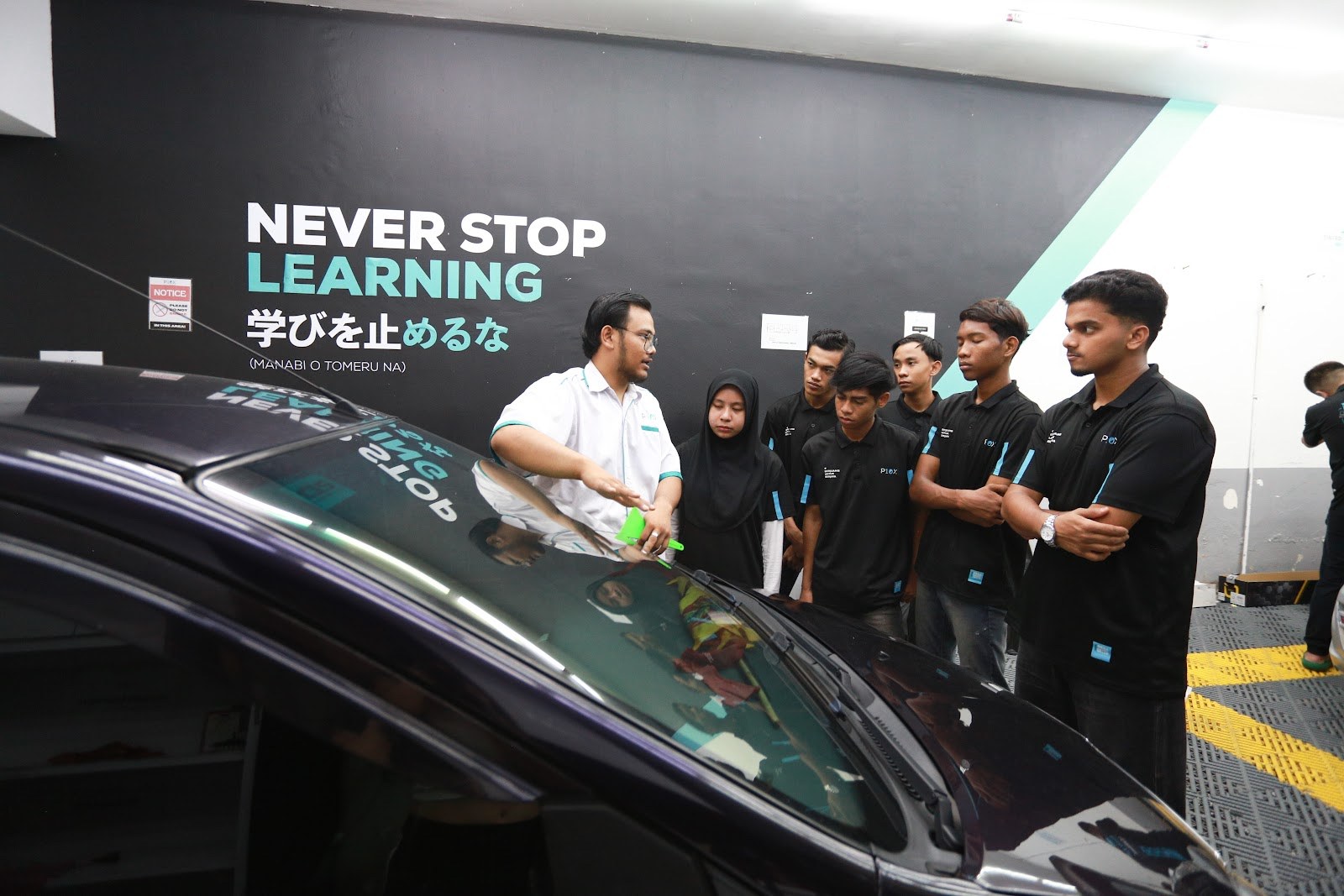
Before choosing, ask to understand an ordinary training session. Will you only see a demonstration, help the installer, or have a turn yourself? A demonstration can show tool handling clearly. Your own attempt gives the instructor something specific to correct. Look for both, rather than judging the opportunity only by photographs of finished cars.
Choose a course, workshop training, or both
A useful starting point is to compare who will teach you, where you can practise and who will check your attempts. A workshop may let you learn during its normal customer jobs, while a course sets aside time for lessons. Neither option tells you how much practice you will get until you ask.
If a workshop offers training, ask who will teach you and how learning fits around its customer work. Find out what a beginner normally helps with, when installation practice becomes available and how someone decides the next task. Do not treat being present in a busy shop as a complete training plan.
For a course, look beyond the number of days in the title. Ask how much of the practical session involves your own work, what tools and materials are included and what happens when you need a step explained again. Confirm the teaching language, location and actual dates before arranging leave or travel.
Access can change the decision. We came across a beginner on TintDude who wanted to learn but could not find a nearby shop hiring or a tint school close to home. That is an overseas example, not a picture of every Malaysian town, but it raises a useful question: where can you realistically get hands-on guidance?
You might use a short course to begin, then continue practising with permission and supervision elsewhere. Do not assume either provider will arrange the other part. Ask about practice access separately, including who supplies materials and who will be available to help.
Compare the whole commitment rather than the fee alone. Travel, time away from paid work and the availability of follow-up practice can make an apparently convenient option difficult. If you do not yet have a safe place to continue practising, it may be too soon to set a date for taking on jobs.
Learn glass preparation before fitting film
Preparation is part of the skill, not something to hurry through before the interesting work begins. A beginner should learn how the instructor checks the vehicle, prepares the glass and protects nearby components. Ask to understand the reasons for each stage rather than copying a sequence without knowing what to look for.
Our five-day course teaches old-film removal and side-window preparation before side-window installation. When comparing courses, you could ask whether the trainer will show you how to prepare the glass and check your attempt before you start fitting film.
When watching a demonstration, pay attention to how the instructor identifies existing issues and explains what needs protection. If you do not understand a mark on the glass, a window control or a part near the working area, ask before touching it. Do not experiment on a customer's vehicle to find out how something comes apart.
Ask your trainer which tools and materials are suitable for the task you are being given. Guidance for one vehicle or product should not become a rule you apply to every car. Learning when to stop and ask is as important as remembering the next step.
Keep your practice notes short and useful. Write down what you were asked to check, what you missed and what you need to notice next time. That gives the trainer a starting point for the next session without turning a beginner's notes into an untested instruction manual.
Our preparation reel discusses glass and window-switch checks, protection and door-trim work in its example. Treat the trim work as something to discuss with your instructor for the particular vehicle, not a reason to remove every door panel yourself.
Practise positioning film and finishing each window
You need a turn handling the film yourself, with someone able to step in and explain a correction. Watching a smooth installation does not show how you respond when your own attempt needs adjustment. Ask how the practical session moves from demonstration to a learner's attempt and then to another try.
In the current five-day outline, side-window installation comes before work on rear glass and curves. Day five includes full-vehicle practice and instructor evaluation. Those are the course's stated learning activities, not proof that every learner will finish every kind of vehicle confidently afterwards.
During practice, ask the instructor to explain the part you are finding difficult. Is the issue in preparation, handling, positioning or the way you are checking the result? A specific explanation helps you decide what to repeat. Simply being told to try again gives you less to work with.
Do not judge progress only by whether a window looks finished at the end of a session. Be clear about which steps you completed and where the trainer took over. A corrected learner attempt is still useful learning, but it should not become a claim that you completed the whole installation alone.
Before trying a different glass shape, you can ask the trainer whether you need more practice on the task you have just attempted. The timetable tells you when a topic is taught, not whether you are ready to move on to it. Talking through what you still find difficult can help you understand why the trainer is moving you on or asking you to repeat a step.
Our reel explains how installation solution lets the film slide so you can adjust its position. If that is unclear, your trainer can explain it while showing you the task. The reel is not a mixing recipe. Follow the trainer's guidance for the film and materials you are actually using rather than guessing from an online explanation.
Make sure someone reviews your own work
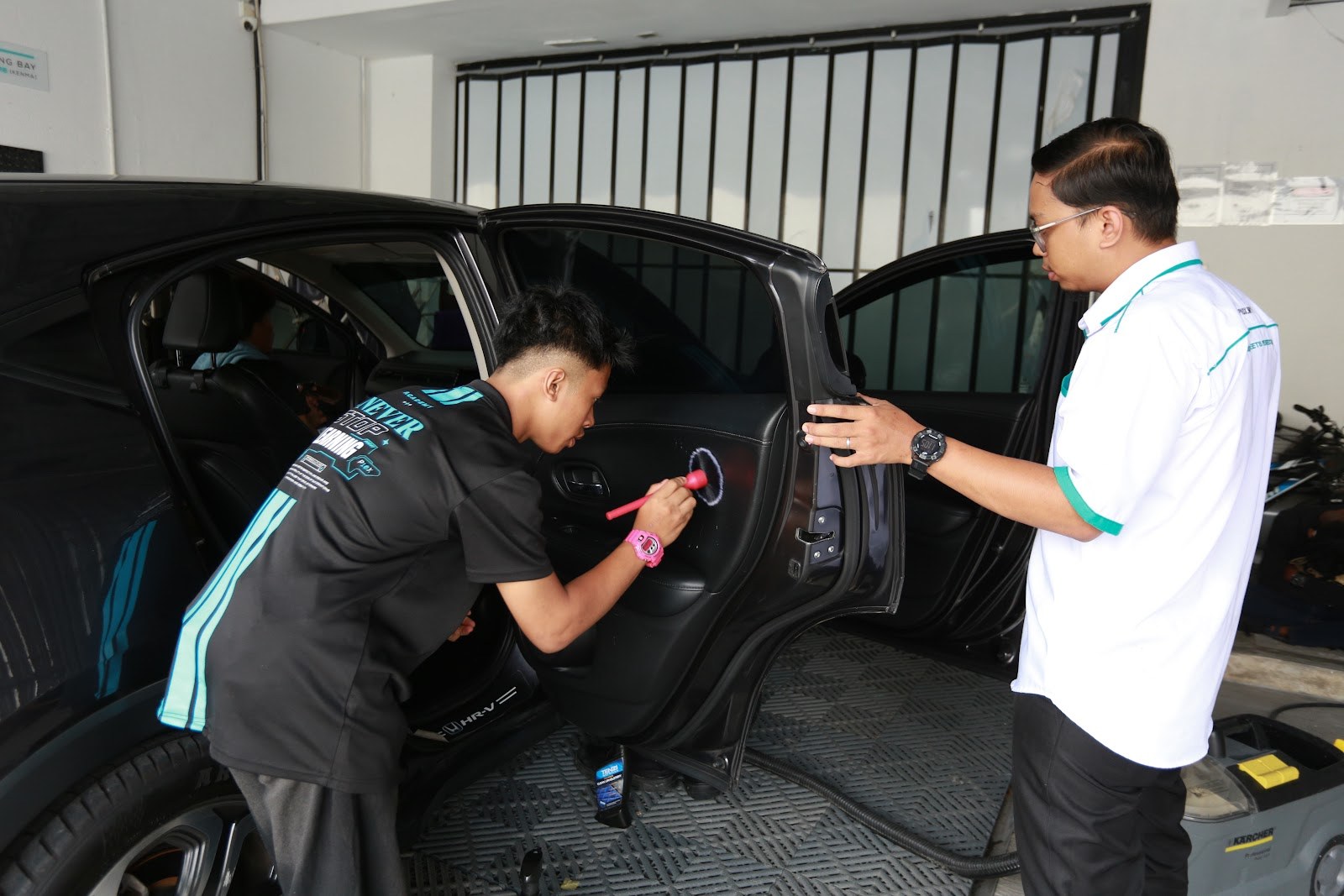
Good feedback tells you what needs changing and gives you a chance to try again. Before committing to training, ask who will observe your attempts, how they explain a problem and whether you will have time to repeat the relevant step. General encouragement is welcome, but it cannot replace a clear correction.
Being employed in a workshop does not automatically mean that this is happening. We also came across a prep worker on TintDude who had spent 18 months at a shop but rarely got to practise installation. It is one historical overseas account, not a normal training timescale or a claim about Malaysian employers.
If you are in a similar position, an early conversation with the person training you may help. You can ask which task you are learning now, what you need to improve and when you can try installing film with someone beside you. Spending longer at the shop does not, by itself, give you more practice.
Interested in learning window tint installation?Explore Window Tint Installation: 5-Day Experience Course for the current course outline and contact options.
After a session, you should be able to explain one thing you did better and one thing that still needs work. If you cannot, ask the instructor to show you the difference while the task is still fresh. You do not need a complicated scorecard; you need to understand the correction.
Ask for feedback on preparatory work too, not only on a completed window. Having an instructor beside you while you work can help you raise a question before you continue. The point is not to avoid every beginner mistake, but to notice it, discuss it and practise the step again with the right guidance.
Know what the course certificate confirms
Check the exact certificate and the conditions for receiving it. Our five-day course page states that learners receive a P10X Academy Certificate of Completion after passing the day-five assessment. It should not be described as an automatic SKM award or as proof that an employer must hire you.
Before enrolling, ask how the assessment is carried out and what the instructor expects you to demonstrate. Also ask what happens if your work needs more practice. Do not assume a resit, extra coaching or another practice session is included unless the provider confirms it.
Keep the certificate alongside an honest account of the tasks you have practised. When speaking to a workshop, explain the training you completed, what was assessed and where you still need supervision. That gives the employer more useful information than a broad claim that you are fully trained.
A course can end while your learning continues. You may still need help with a different vehicle, an unfamiliar material or a task you have not repeated enough. Ask your instructor what to work on next and what not to attempt alone yet. Choose a next practice session you can actually arrange, with someone who can help, rather than setting a date when you expect to be ready for every job.
Apply for trainee work with an honest skills record
A trainee application can describe the tasks you have tried, the help you needed and what you still want to learn. If your experience comes from demonstrations or supervised course practice, say so rather than presenting it as independent installation work for customers.
Make a short record of the relevant tasks you have done. Separate work you observed, work you attempted with help and work you have repeated with less prompting. Describe the task and your own contribution rather than relying on labels such as beginner, intermediate or professional.
If you have photographs, ask permission before sharing them. Workshop and customer images may contain information that should not be passed around. A photograph of a completed window also does not explain who prepared it, who fitted the film or who corrected the work. Be ready to say which part was yours.
You do not need to invent customer jobs to make an application look stronger. Course practice and supervised workshop tasks can be described as exactly that. If you have not yet had a chance to practise a particular step, identify it as something you want to learn.
When contacting a workshop, ask whether it is considering beginners and what the trainee would actually do. Find out who supervises, how practice is arranged and whether any assessment is part of the application. Requirements vary, so read the individual vacancy rather than assuming the ServAuto example applies everywhere.
If training is discussed alongside a future job, it helps to distinguish an employment offer from a course place or a chance to apply later. You can ask for the actual terms before making plans around a job that has not been offered.
Choose your next training step
Your next step depends on where you can learn and practise now. If a nearby workshop takes beginners, you could ask who would teach you and when you would get to try installing film. If you prefer a course first, check what you will do in class and where you could keep practising afterwards.
Before paying or accepting an arrangement, confirm the dates, location, teaching language, included materials and assessment conditions that apply to you. Our five-day course is for adults aged 18 and above and provides tools and materials during class. Tools supplied during class may not be available afterwards.
The aim is to leave the next conversation knowing who will teach you, what you will try and who will check it. If one of those pieces is missing, ask another question before committing. Starting without experience is possible; building experience means having a realistic opportunity to do the work, receive feedback and return to the parts you have not yet mastered.